Category: Design

New homes, wildflowers and a railway station: a visit to Kidbrooke Village

Kidbrooke Village offers a new lifestyle

Kidbrooke Village is a large new development of some 4,700 homes in the borough of Greenwich, South East London. The development replaced the 1960s/ 1970s Ferrier Estate which was knocked down to build something completely different. The development is a partnership between local government, housing developers, and community stakeholders and consists of an interesting and unusual mix of high density development alongside new parkland and wildlife areas.

Approaching Kidbrooke

We walked to the development from the adjacent suburbs. The street-scape suddenly changed and there we were in Kidbrooke Village. It was a completely different place from the suburbs of the 1930s. Some of new homes were still in construction.


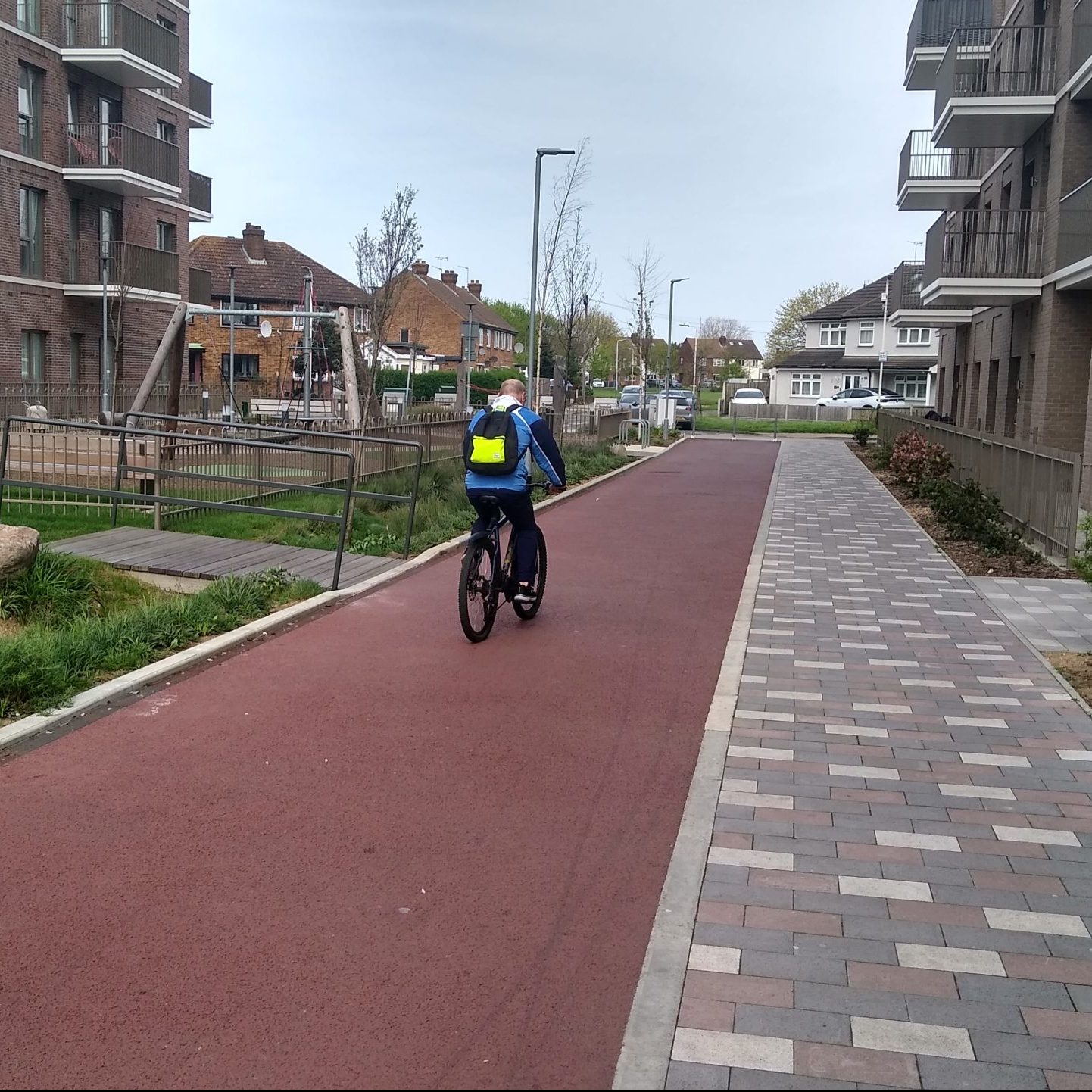
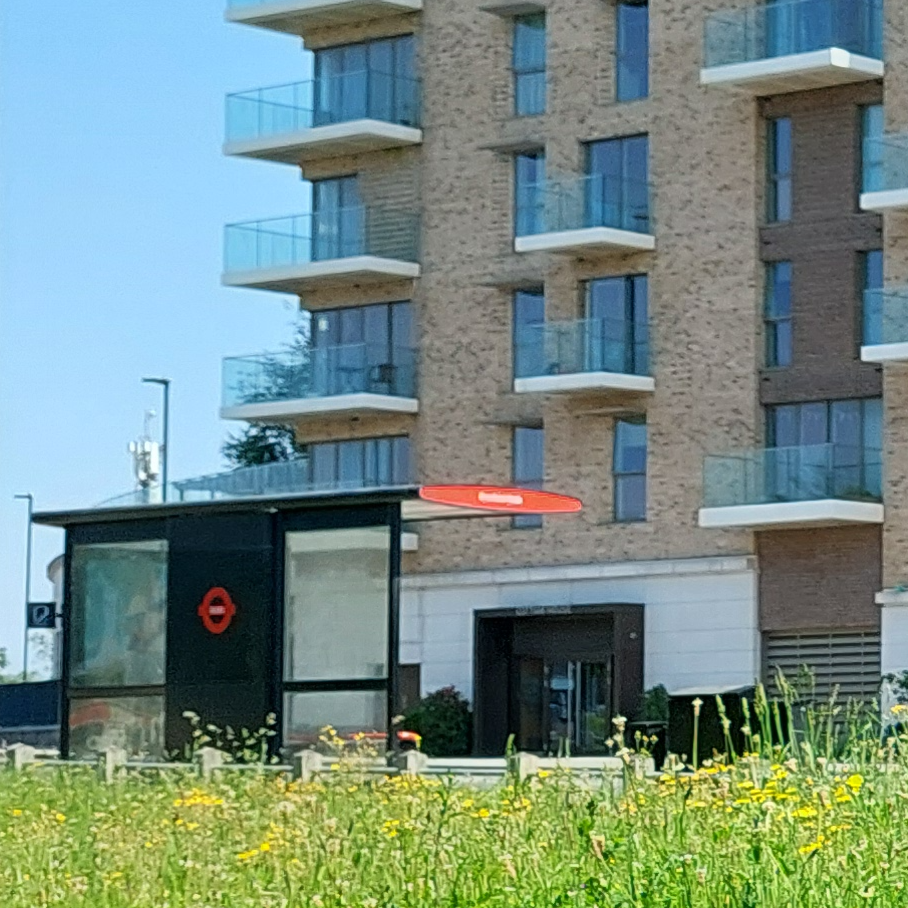
As we walked in, we noticed that there was a bus stop already in place in the area still being built. In Kidbrooke, public transport is an essential component. Parking is very limited for flats with many with no parking (although parking spaces can be paid for if needed). Town houses do have usually one space. It’s anticipated that people will use public transport, walking, cycling, scooters and car-clubs. And from what we could see, they do.

The number of affordable homes at Kidbrooke Village is planned at 35% (including 15% social rented). This is London and property has price tags to match. Town houses with allocated off-street parking and private gardens, offer luxury accommodation.

The accommodation in apartment blocks has the benefit of proximity and views of an extensive green area for walking, picnicking, playing, and enjoying wildlife right despite being in London. The idea is explained in the blog London Wildlife Trust: Bringing Kidbrooke alive with wildlife.

This area was popular with walkers and people sitting out. As explained in the London Wildlife Trust blog about Kidbrooke: ‘Developments don’t have to squeeze out wildlife. The benefits are clear: trees in urban areas improve the view, aid privacy, provide shade and help reduce pollution and flash flooding; community green spaces bring people together; and local parks and woods are valuable placeTs for people to walk, play and unwind in’.

The childrens’ playground has a reputation beyond Kidbrooke Village as a place to come to, with imaginative play equipment for different ages. You can walk to it easily from the new homes. But there are are other outdoor and indoor recreational facilities all within a short distance of the apartments. We found courts for tennis, football, basket ball and netball. There is also Artfix – a cafe, school, workspace and venue.

We saw parts of the development that looked almost European with parking hidden away beneath and streets that are freed more those on foot. There are modern bus stops right next to where people live, a big contrast to the fringe-of-town greenfield developments that we have visited where bus stops do not have a central position like this. There are number of bus routes serving Kidbrooke, including the 132, the 178, 286, 335 and B16.

When we visit new greenfield development we often get lost and there are no maps. But in Kidbrooke Village we found maps showing how far it was to walk to different places, and the location of bus stops and the railway station. The transport side of Kidbrooke village reflects its location in London and the importance that people living there place on sustainable travel.

Kidbrooke station is actually in the development with a square built next to its new entrance. Here we found a supermarket, street food sellers, cafe and a pub. Destinations by train include Blackheath, Lewisham (for the DLR), London Victoria, London Cannons Street and Charring Cross and going out of London, stations to Dartford and Gravesend

We also discovered a large wholefoods store by the station. With such a density development and with so many people living nearby a more specialist shop still thrives. It was interesting to contrast this situation with the very low density greenfield developments we have seen where the establishment of a local centre is difficult.

We caught the train back towards London, reflecting that all in all we found Kidbrooke Village to be an interesting and exciting development and were impressed at the combination of new town houses and apartments, greenery and trees, public transport and many local amenities that you could walk or cycle to. It was such a contrast to the enormous greenfield estates being built around our market towns which are car-based. Kidbrooke Village appeared to offer a different life style of local living and use of sustainable transport.

Wichelstowe: a visit to Swindon’s new urban extension

We started from Swindon station. Swindon’s Signal Point building stands above the town’s train station, but has beeb unused and abandoned for a long time.
The centre of Swindon was in need of regeneration.
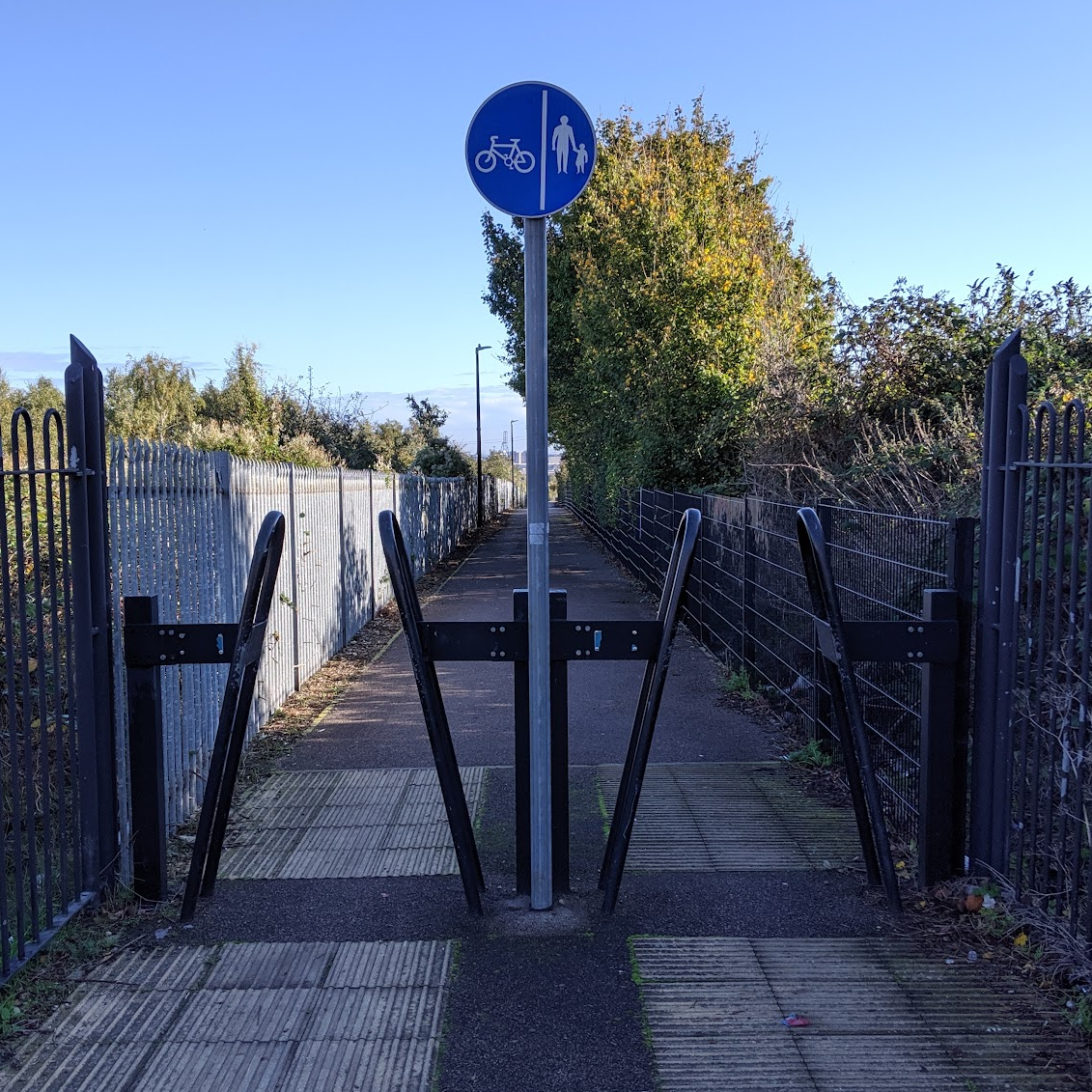
A 20 minute cycle ride from Swindon station and we found a path that took us straight into the new development.
East Wichel had been designed as a walkable place but parts lacked greenery completely.
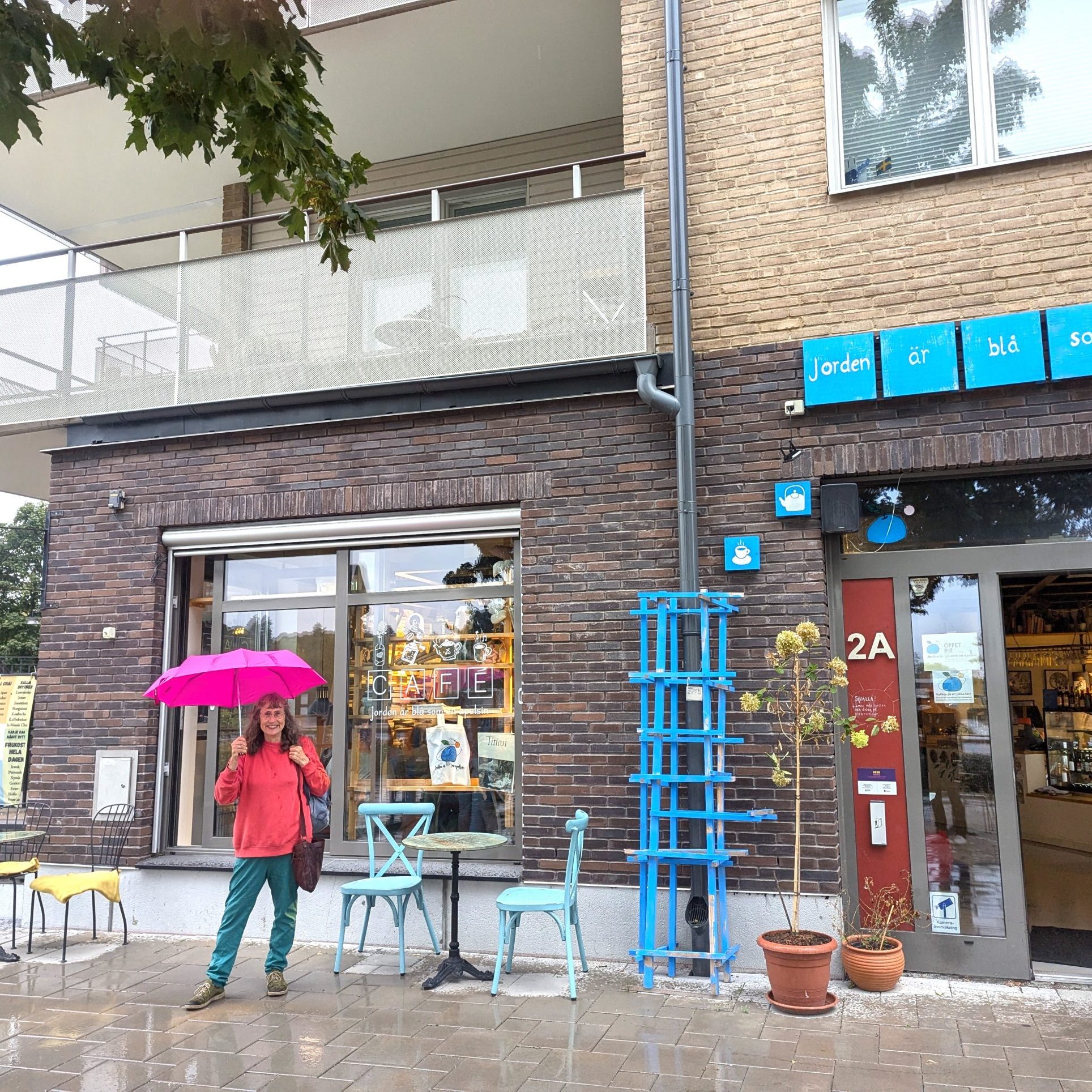
It was great to find the UK Cafe and the Wichelstowe Fish Bar in the middle of the development next to a Coop convenience store.
The pub was easy to walk to on a local street.
After visiting East Wichel a cycle along a distributor road bought us to Middle Wichel which is still being constructed. It has a secondary school, seen here.
View of the extensive canaliside area in Middle Michel and footbridge in the distance.
New town houses in Middle Wichel.
Cycling back from Wichelstowe to Swindon along the canal.

In May 2024 Transport for New Homes visited a new part of Swindon called Wichelstowe, a large urban extension which has been slowly built up over the last 18 years since it was given planning permission in 2006. Swindon centre itself appears to be in bad need of regeneration with the Brunel Shopping centre having suffered the loss of many businesses. We started from Swindon Station.

Wichelstowe as an urban extension began as a collaboration between Swindon Borough Council and Taylor Wimpey in 2002 to jointly fund and provide infrastructure needed for housing on what was known as Swindon’s ‘front garden’ between the town and the M4 motorway. It has its own Wichelstowe wiki page.

The Wichelstowe development is large – 324 hectares and has a very long and complex planning history. The development will eventually have 4,500 homes. The planning history of the scheme involves complex decisions on every aspect of the estate and the original masterplan has altered over the years.

East Wichel has a walkable and village-like feel. The ‘Wichelstowe Design Code’ — imposed by the planning authority, requires most houses to have a different external appearance: no more than two houses in a row look identical. The restrictions also require most houses to be behind a small railed front garden, whilst each parcel of housing must contain some larger houses, some cottage-style houses, and a barn-style apartment building. 

The cycle ride from Swindon station took about twenty minutes. The development is not meshed with the streets of the existing suburban area, but is separate. Luckily we found a way across the green strip between the edge of town and the new estate and before long a group of new homes were welcoming us.

However some parts of the development like the one shown here, lack greenery, perhaps seen as too expensive to provide and maintain.

There is a small local centre in East Wichel with a convenience store and a restaurant and these are primarily designed for arrival on foot although there is parking. The inclusion of a small green area (in the distance in the photo) makes this part of the development feel more friendly. It was great to see an independent business in the development – a restaurant right in the centre. There is a playground and the primary school is incorporated into the development in a traditional manner on-street with limited parking. The pub is equally walkable to and handy for a quick visit.

After stopping at the pub for refreshment we followed the road to the other part of the development area, Middle Wichelstowe which is quite different from East Wichel. Whereas East Wichel has been designed for walkability and on a human scale, the more recent parts of this urban extension appear to be more around the car, in terms of road and junction space, and the general language of the scale of the layout.

The cycle ride to Middlewichel was on a long stretch of distributor road, with pavement, and at the end of it you could an area still partly in construction. Parents with small children were making their way along the road, presumably coming from the primary school and walking home.

The approach to Middle Wichel gives a view of the new secondary school there. The architecture in this part of the development is generally quite different from East Wichel and includes town houses as well as low-rise apartments. Roads are wide although with a 20 mph limit, but rather than a cosy parade of shops and eateries, the place seems to be centred on a very large Waitrose supermarket. The place is used by shoppers from far afield, because of the easy motorway access and the ample car-parking provided. A bus looks almost out of place at this scale of car-based development and seemed almost empty.

Near to the giant Waitrose was the Wilts and Berks canal and on its banks was a modern and landscaped bar and restaurant, making the best use of its waterfront position. It had a large car-park and obviously attracted people from a long way around the area. However may could walk.

Nonetheless the development has a reasonably good bus service for those who don’t drive or cycle (10-30 minute during the day from East Wichel to the town centre) but travel across Swindon to for example, employment areas, leisure centers, or the hospital is much faster by car than bus, because of having the change bus one or more times, and because Swindon is a low density town designed around link roads, distributor roads and roundabouts for the purpose of easy driving. That said the Swindon Bus Company runs some good cross-Swindon service from the newer parts of the Wichelstowe development and stop at the large Nationwide Building Society campus nearby too. We noted a first floor flat in a new apartment block for 200,000.

There were also a number of open spaces and these are being developed for the combined purposes of wildlife habitat and the enjoyment of residents – and there is the Wichelstowe ponds area by the M4 for walks and looking at swans, herons and other wildlife. A new access road is being built for the development. The southern access road, which crosses the M4 motorway to the east of junction 16, provides the fourth access to the Wichelstowe development .

The cycling route back into town ran along the canal for at least some of the way. The cycle route was great except that when it ended it was a matter of negotiating the traffic as usual.